
Improving farm resilience to changing weather
With extreme weather events set to increase in frequency, alongside warmer wetter winters, to drier warmer summers, how can land managers prepare?
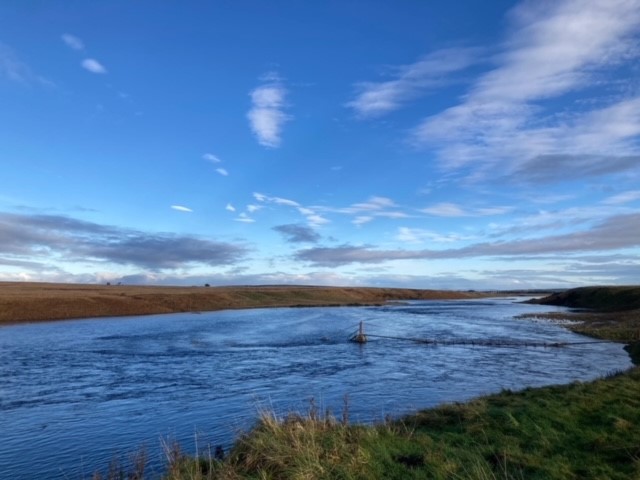
Changing weather patterns have significant impacts on the agricultural sector. Over the years farmers have experienced the extreme from too much water, to too little. This trend is set to continue and become more frequent. How can you plan for the unknown? Here we look at different options, which are available to help your business and help make it more resilient in a changing climate.
Recent studies have shown that Scotland should expect more frequent extreme weather events, which land manager need to be prepared for. This will result in increased drought, water scarcity and flooding events to increase throughout the year and between years.
Water Scarcity
Water scarcity is when there is not enough water to meet ecological and human demand. Scotland is renowned for its water, however, with changing weather patterns it is predicted that this will not be guaranteed across the country year on year. The severity of the impact may change with variant weather patterns. Looking to 2040 it is predicted that drought conditions are set to increase in frequency to 1 in 3 years, compared with previous 1 in 20 (with eastern Scotland more likely to be impacted). The Centre of Expertise for Waters conducted a study looking at Future Predictions of Water Scarcity in Scotland: Impacts to Distilleries and Agricultural Abstractors. This report looks into water availability throughout Scotland for agricultural and distillery requirements. Speaking to land managers they dived into how these sectors use water, looking to ways to safeguard this resource to maintain business needs in the future. How land managers cope with this change will require long- and short-term solutions. Management options vary from looking at catchment scale schemes, to installing boreholes and storage lagoons, to basic maintenance of ensuring the pipes are not leaking and all leaks fixed as soon as possible.
What can you do
| Short term: things you can do now | Medium term: things you can plan to do in season | Longer term: things you may need to consider to protect your business going forward |
| Monitor and record your current water use: | Invest in new technology: | Alternative farm water supply: |
| Understanding how much water you are using on site can highlight areas where improvements and mitigation measures can be implemented. | Introducing soil moisture probes can allow for more efficient irrigation scheduling. | Investing in storage on farm can provide alternative options during drought periods. |
| Regularly monitoring use can highlight where there may be anomalies and pick up leaks or breaches, which can be acted upon quickly reducing water waste. | Could you invest in more efficient irrigation equipment? | - Storage lagoon - Rainwater harvester - Pond/ wetland creation |
| Utilise modelling to improve and target water based on predictions. | Would a borehole be suitable for your location? | |
| Monitor your risk: | Improving soil: | Catchment Planning: |
| There are tools, meters and basic logbooks, which can be used to track your irrigation, you can use this to look at ways to become more efficient and potentially reduce water use on farm. | Healthy soil has the potential to store and hold more water, maintaining and improving soil organic matter can help now and in the future. | Would there be the possibility to work with others in your catchment to increase better water use and supply for all? |
| Conduct a Drought risk assessment using DRAT: Drought Risk Assessment tool which SEPA have created to evaluate your risk to drought. | Avoid heavy machinery operating on wet soils to reduce compaction risk. | |
| Check your equipment: | Crop resilience: | Introduction of Nature based solutions: |
| Regularly check equipment for leaks or signs of wear. Fixing even the smallest leak can save you a lot of water. Don’t waste it. | The introduction of different seed varieties which bring more resilience to extreme weather may be an option. | Consider nature-based solutions for longer term opportunities to increase water retention on farm. |
| The introduction of cover crops or crop variety with different rooting depths can offer protection in a changing climate. |
Infrastructure investment
Irrigation/storage Lagoons
Lagoons are a method to store water on farm throughout the year. They are constructed ponds, which can be used to hold water until it is needed for irrigation and other requirements on the farm. These schemes can offer a safety net in times of drought when abstraction is not permitted/reduced.
The location of a lagoon is important to make it as practical and economical as possible. Siting the lagoon close to where the water will be required is useful as this reduced transport costs and water is more readily available when needed. Additionally flatter land can be of an advantage to reduce construction costs.
Rainwater Harvesting
Rainwater harvesting is the process of collecting rainfall from buildings and storing the water into containers to use when required. The water is collected via gutters and stored in a tank, which is either sunk into the ground or situated beside sheds. The material and colour of tanks is important to ensure that sunlight is prevented from affecting the water, which would result in algae growth.
The Farm Advisory Service has produce a guide on rainwater harvesting.
Boreholes
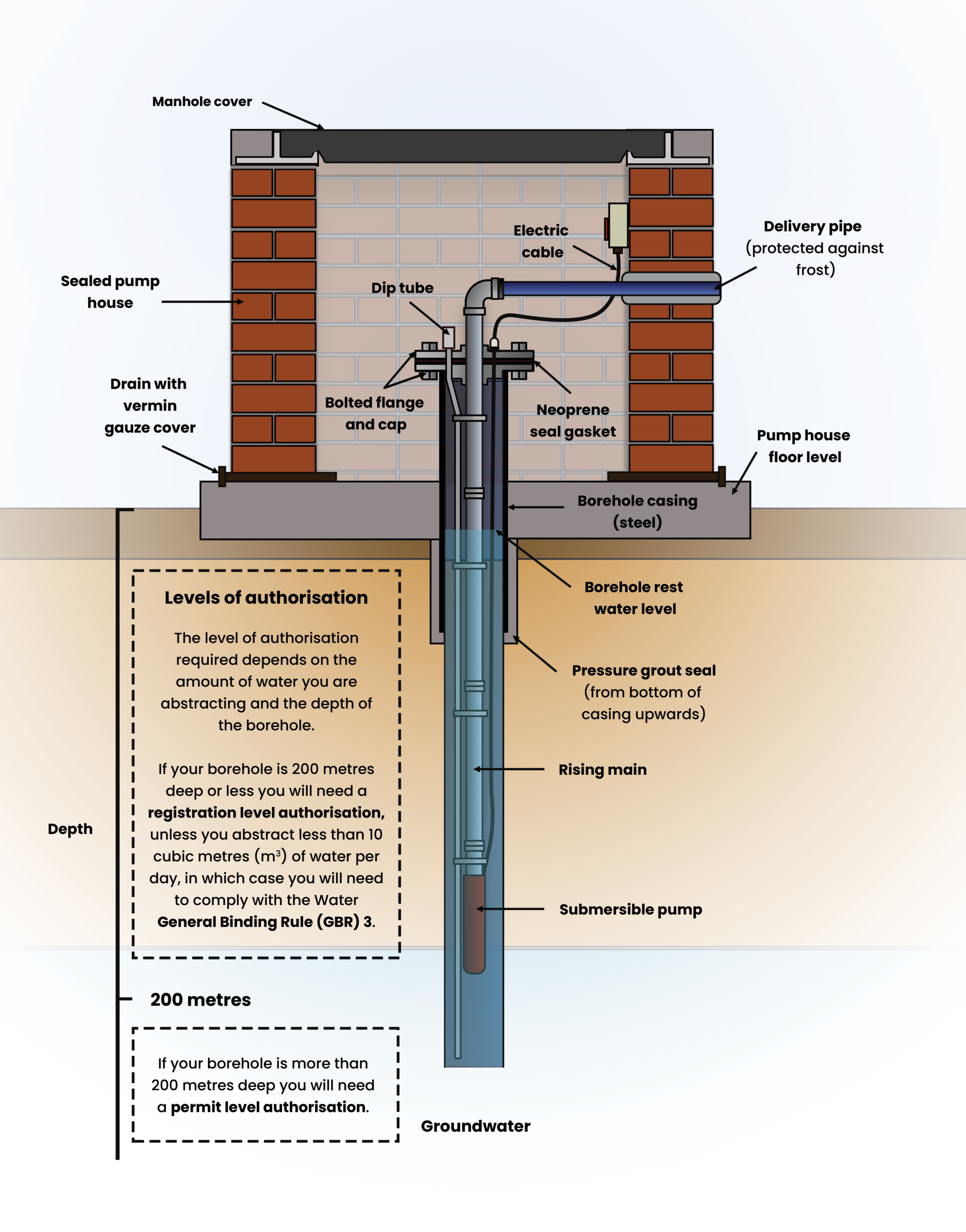
A borehole is a narrow hole made in the ground designed to locate materials such as water and oil. These systems can reach great depths and allow access to groundwater, which would not be otherwise available by other abstraction techniques. Boreholes are currently regulated by SEPA within their abstraction regulations, as shown in Figure 1.
Boreholes do rely on groundwater availability and with recent weather variability this resource is not guaranteed. You will need to speak with SEPA and review groundwater levels in your area to ensure that there is enough water available to make the financial investment worth it for your business.
All boreholes deeper that 15 m need to notify The British Geological Survey.
Figure 1 highlights the three different authorisation levels, which are currently in place for borehole construction. Please note that Fit and Proper Person test and standard conditions may also apply. Full details of authorisation and conditions can be found on SEPA’s website.
Authorisation
Where there is access to an offline pond, i.e. a pond that isn’t connected to a water course (e.g. a purpose-built storage pond) it may be used to provide water, subject to the following:
Offline Pond fed by authorised abstraction
This is a pond, lagoon or tank that stores water from a watercourse or borehole rather than from field drains or rainwater.
The abstraction from the watercourse or borehole will have a separate Authorisation that must be complied with and may be stopped if river levels become too low.
There is no need to apply to SEPA to use the stored water, though it may not be possible to replenish this water if restrictions are in place.
Offline Pond fed by field drains or groundwater
This is a pond, lagoon or tank that stores water from drainage or groundwater. It is not otherwise connected to the water environment.
A registration is required to use the water from this type of storage, though SEPA do not limit the abstracted volume.
SEPA welcome pre-application proposals so they can assist you in the most suitable license for your needs. However, if your activity complies with the general binding rule you may not have to contact SEPA.
Water Scarcity: Impact and mitigation measures in Scotland
Video looking at how drier periods affecting water supply when needed, what can land managers do to protect water supply?
Impact and mitigation measures in Scotland
Water Scarcity: Impacts across Scotland
Podcast discussing what does water scarcity mean for Scotland?
Impacts across Scotland
SEPA Water Scarcity
SEPA host information and updates on water scarcity throughout Scotland. Find key information, tools, guidance and water scarcity reports here.
Water Scarcity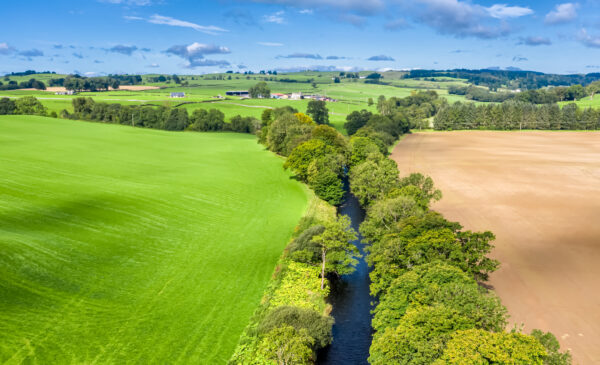
CREW Planning for Water Scarcity
Practical guidance for Scottish farmers and growers
Practical guidance for Scottish farmers and growersFlooding
Climate change is not only increasing the risk water scarcity conditions across Scotland, but we are also seeing more frequent extreme rainfall events that lead to flooding.
Here are some actions you can consider to make your business more resilient to floods and wet weather events:
| Short term: things you can do now | Medium term: things you can plan to do in season | Longer term: things you may need to consider to protect your business going forward |
| Sign up for flood warnings: | Enhance soil health: | Infrastructure improvements: |
| SEPA’s free Floodline service provides automated alerts and warnings for your area via phone call, text, or email. | Valuing Your soils booklet for tips and ideas around protecting and improving soil health from better nutrient use to increasing soil organic matter | Investing in layflat fencing in flood prone areas/drainage systems could provide you move resilience and flexibility to flooding. |
| Review insurance cover: | Identify and minimise compaction risk: | Storing water: |
| Does your policy cover flooding? Review your cover with an agricultural insurance provider. If you are affected by flooding and need to make a claim, having photo or video evidence of the flood/resulting damage may assist your claims process. | Using heavy machinery on waterlogged land can increase soil compaction. Compacted soil can impact yields, has poor infiltration and increases run-off risk | When water is in plentiful supply, could you capture it? Via offline storage or storage lagoons to use when needed on farm? Building infrastructure to hold the water back on farm could help your business at times when water is scarce. |
| Create a flood plan: | Consider regenerative agriculture techniques: | Natural flood management (NFM): |
| This could be in the form or a written plan, or an annotated farm map. Things to consider: - Contact information for staff, farm vet and emergency services. You may want to add contacts for feed and fuel suppliers and hauliers for livestock transport, along with details of your insurance policy. - Evacuation routes/ procedures for moving livestock and equipment - How/where to shut off utilities - you might know how to turn off the farm's electricity, gas and water supplies safely, but do others? - Location of assets such as fuel, feed, bedding, fertilisers and chemical stores | From maintaining soil cover year-round, to reduced tillage there may be a range of regenerative agriculture techniques you can adapt to fit your farming system. | Could you provide natural barriers to slow the flow? Working with natural processes, such as restoring riparian woodland, creating floodplain wetlands/wetlands and ponds/leaky barriers. These systems can help reduce the energy in the river, reducing the peak floods and potential damage to the surrounding area and further down the catchment. |
| Explore funding and grants: | Investigate nature-based solutions: | Catchment partnerships: |
| The Scottish Government 2025 Agri-Environment Climate Scheme (AECS) included several measures to manage water quality and flood risk, including management of floodplains, protecting riverbanks and Rural Sustainable drainage systems (RSuDS) options. | Several options, specifically tailored to your farm, could help reduce flooding risks and the impact on your business. Nature based solutions cover a range of measures such as riparian tree planting to stabilise riverbanks, to planting shelterbelts and hedgerows to protect fields and livestock from strong winds and rain. | Flooding is a catchment issue, could you work with neighbouring landowners and agencies to form long term sustainable solutions which work for all businesses. There may already be initiatives that you could work with to help reduce the impact of flooding on your business. |
| The Future Farm Investment Scheme (FFIS) had more flexibility in terms of what it offered, supporting a range of investments that could help farmers improve business resilience. Please check schemes opening rounds for future funding. | Flood management practices on one farm can affect others in the same river catchment. The award winning Eddleston Water Project, led by the Tweed Forum in the Scottish Borders, provides an excellent example of natural flood plain management techniques in action and how its benefitting both farmers and local communities. | |
| Assess water infiltration: | Increase soil organic matter: | |
| How water moves through your soil can be a key indicator to soil health. Conducting infiltration tests around your farm can highlight areas where water may not flow freely through the soil, resulting in water not being held within the soil during intense rainfall/flooding events. | Organic manures, incorporation of crop residue and reducing soil disturbance can all help to increase soil organic matter, which will improve soil structure and water infiltration rates. | |
| Speak to your neighbours: | Take a look at drainage: | |
| Discuss flood planning with your neighbours; are there areas where animals or machinery can be relocated to in advance of a flood? Having reciprocal arrangements in place now may save time (and stress) in the event of an emergency. | Checking and clearing drain outfalls and maintaining ditches can help to move water around your land, prevent ditches and drains from backing up and reduce flooding risk. If the ditch is less that 1 m width you may clear the ditch, provided you follow GBRs and avoid periods where fish are likely to be spawning, without contacting SEPA. For any other works you need to contact SEPA to discuss and gain the correct authorisation. |
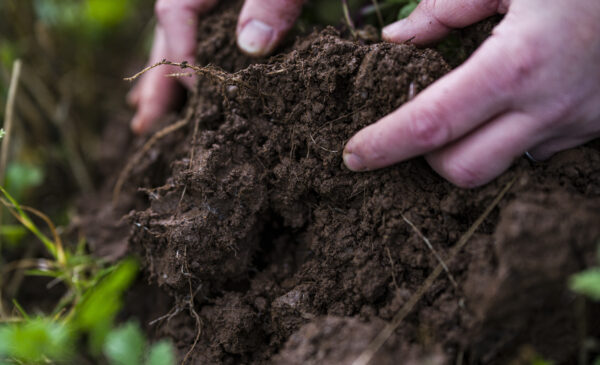
Improving soil organic matter
Organic matter, why is it important, what benefits does it bring to the soil? In this podcast we discuss organic matter, from what it is, to the benefits that can be gained from improving the quantity in your soil.
Organic Matter - why is it so important?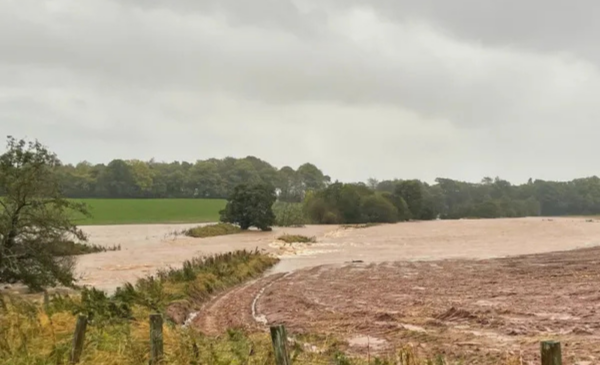
Managing water on farm - from drought to flooding
From drought to extreme flooding this podcast discusses trends and on the ground experience farmers have faced during extreme weather events. We explore ways farmers can prepare and mitigate changing weather patterns to improve business resilience.
Managing water on farm from drought to flooding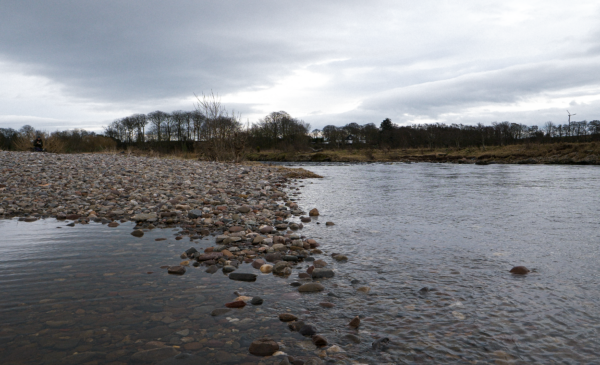
Flooding- how can SEPA help you prepare and increase resilience
The impact of flooding is affecting communities across the country – but what practical steps can you take? In this video, SEPA sets out the key tools and services available to help land managers prepare for, respond to, and recover from flooding events. It highlights how you can make the most of SEPA’s information and support to protect your business.
Working together to reduce flood impact
Natural flood management can help with both water scarcity and flooding. Information can be found on different techniques and management options.
Natural Flood Management
Practical guidance and information on how to introduce natural flood management into your farm business. Working with the environment to find long term resilience.
Farmers Guide