
What are the regulations regarding slurry storage capacity and design on farm?
Stephen Field, SEPA
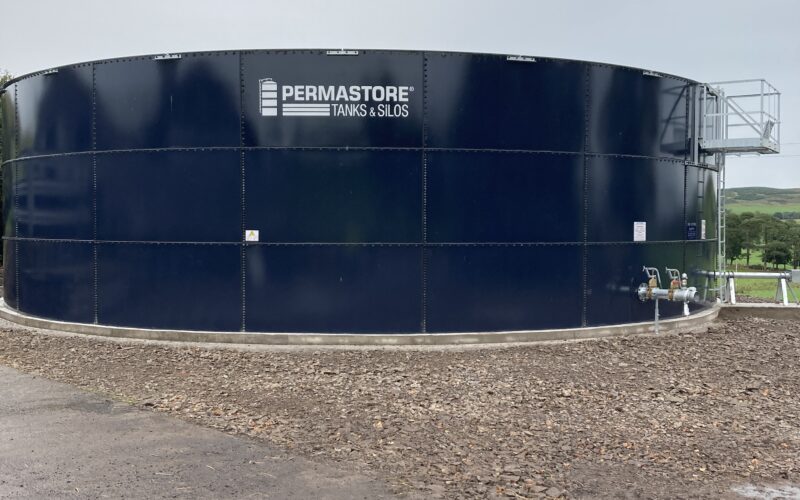
Regulation history
In 1991, the Control of Pollution (Silage, Slurry and Agricultural Fuel Oil) (Scotland) Regulations (SSAFO) was introduced, providing:
- a legal definition of slurry,
- a minimum design specification for slurry storage tanks, and
- a requirement to have 180 days (~ 6 months) slurry storage capacity.
Farmers could operate with a smaller storage capacity if they could demonstrate, through the production and implementation of a Farm Waste Management Plan, they did not require 180 days storage. Since 1991 the agricultural sector has seen many changes, not just to the regulations but also the size of dairy and beef enterprises.
After the introduction of the Controlled Activities Scotland Regulations 2011 (as amended) (CAR), Scottish Government in 2021 amalgamated the SSAFO regulations into CAR under the General Binding Rules (GBR’s).
With the introduction of CAR GBR’s in 2021 the Scottish Government set transitional dates by which all farming operations needed to comply fully with the new GBR’s. In November 2025 the CAR Regulations were replaced by the Environmental Authorisation (Scotland) Regulations 2018 (EASR). We now have EASR Water General Binding Rules (GBR’s) for silage, slurry and anaerobic digestate (AD). These Water GBR’s are identical in wording to the previous CAR GBR’s, with the only difference being now they have ‘Water’ as a prefix. The Water GBR’s outline the minimum legal requirements for farmers making silage, storing slurry and / or AD on their farm.
Water GBR 32
Water GBR 32 covers farms managing livestock on a slurry-based system, or farms that are producing slurry by virtue of how livestock wastes are being handled. To comply with this Water GBR, from the 1st January 2026, livestock farms producing and storing slurry are required to have a minimum of 22 weeks, whilst pig farms are required to have 26 weeks, slurry storage capacity.
As these regulatory storage capacities are a legal requirement, farmers must now consider if they have sufficient capacity on their farm for the slurry / dirty water they:
- produce,
- collect, and
- need to store.
Guidance on how to calculate this can be found on the Farming and Water Scotland Website FW-Factsheet-1.pdf and Net Regs How much storage do you need?, lesson 4 from Slurry and liquid digestate storage systems – General Binding Rules (GBRs) 32, 33 and 34
Other legal requirements of the Water GBR’s consider siting and design of slurry storage and AD facilities. All slurry and AD storage facilities, whether they are an above ground tank, lined earth bank lagoon or a below ground concrete tank need to:
- be properly designed by an engineer to meet British Standards,
- have a design life of 20 years,
- are leak proof, and
- have the minimum regulatory capacity.
Slurry and AD storage systems must not be sited within 10 m of a watercourse or surface water drain (including field drains) and within 50 m of a spring or borehole. Reasonable precautions must be taken to prevent significant risk of diffuse pollution. SEPA would always recommend farmers have at least 6 months slurry storage capacity. This acts as a contingency for long periods wet winter weather, thus avoiding the need to apply slurry to land when conditions are unfavourable and liable to increase the risk of diffuse pollution and soil compaction. It is also recommended to roof such storage facilities to avoid collecting rainwater falling directly into the store.
Similar to the transition date for slurry storage capacity, Scottish Government set a transitional date of 1st January 2027 for land spreading of slurry using precision technology on smaller farming operations. The Know the Rules Factsheet 8: Organic Fertiliser Application sets out the rules to follow.
Since January 2022 all farms with less than 100 milking cows, 200 beef livestock units, 800 fattening pigs or sows have been exempt from the spreading requirement of Water GBR 18 enabling them to continue applying slurry to land using a low trajectory splash plate (inverted splash plate) whilst all other farms and agricultural contractors whether applying slurry or AD to land have had to do so using precision equipment. The use of high trajectory spreading equipment (some splash plate arrangements, rain guns and Moscha swivel etc.) has been illegal to use in Scotland since January 2022.
What is meant by precision technology? The regulatory definition is equipment capable of low emission, accurate application techniques including dribble bar or band spreader, trailing hose, trailing shoe or direct injection. The regulations do not allow for adaptions to be added to each dribble bar (i.e. splash-it’s) as they are not defined in the regulations as low emission spreading equipment.
Related resources
Key environmental considerations when poultry farming
Stephen Field, SEPA
Whether you are already a poultry farmer or thinking of becoming one, there are key…
Importing organic fertilisers onto your farm -what do you need to consider?
Stephen Field, SEPA
Farmers and businesses receiving materials to be spread on their land have a duty to…
Water Environment – Agri-Environment Climate Scheme (AECS)
Alex Pirie, SAC Consulting
In Autumn 2025 Minister Jim Fairlie announced the return of the Agri-Environment Climate Scheme (AECS),…